Custom Printed Cards and Direct Mail
Printed cards are the category people underestimate. A card arrives, is read, and often stays on a desk or a fridge, and unlike a digital message it cannot be filtered into a promotions folder. For businesses whose customers are local, a printed card remains one of the most reliable ways to be remembered.The range covers business cards including NFC tap cards, direct mail postcards, greeting and holiday cards, schedule and reference cards, plastic wallet cards with key tags, and card and magnet combinations. For fridge magnets see Magnets, and for notepads see Notepads.
Showing 136–138 of 138 resultsSorted by price: low to high
 Price from: $23.99Select options This product has multiple variants. The options may be chosen on the product page
Showing 136–138 of 138 resultsSorted by price: low to high
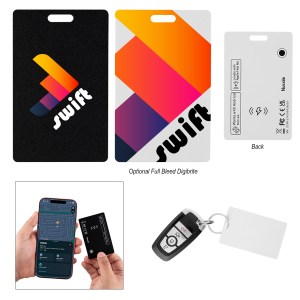
NFC business cards
An NFC tap card holds a chip that opens a link when tapped against a phone, which means contact details, a portfolio, or a booking page transfers without anyone typing. Bamboo and metal versions are common and feel substantial.
Two practical notes. The card is reusable, meaning one person keeps a single card and taps it repeatedly, so quantities are small and the unit cost is higher. And the destination link should be one you control and can change, because a card printed against a URL you lose access to becomes useless.
For most recipients these work well, though note that the tap target on phones varies and some older devices need NFC enabled manually.
Direct mail postcards
Postcards have a specific advantage: there is no envelope to open, so the message is seen even by someone who discards it. That makes them efficient for time-limited offers, service reminders, and neighborhood campaigns.
Size affects postage class, and the thresholds are worth checking before designing, because a small dimensional change can move a mailing into a more expensive category. Card stock weight matters too, since a flimsy postcard reads as junk and a heavy one gets handled.
Card and magnet combinations, where a magnet is attached to a mailed card, solve the retention problem neatly. The card is read and discarded; the magnet goes on the fridge and stays for years.
Schedule and reference cards
A card that contains genuinely useful information is kept. Sports schedule cards for a local team, emergency contact cards, conversion charts, dosage references, and seasonal maintenance checklists all get pinned up or carried in a wallet.
This is the highest-return use of print in promotional products, and it costs no more than a card that only carries an advertisement. Decide what your audience would find useful, put that on the front, and let your details sit quietly at the bottom.
Greeting cards
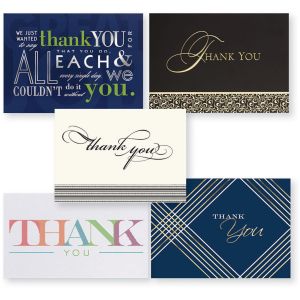
Holiday and thank-you cards still carry weight precisely because so few businesses send them now. A handwritten signature on a printed card lands differently from an email, and recipients display them.
If you send them, send them early enough to arrive before the holiday rush, and sign them personally. An unsigned printed card with a typeset name is worse than nothing, because it communicates that the gesture was automated.
Stock, finish, and ordering
Common finishes are gloss, which makes color vivid and cannot be written on, matte, which is easier to read and accepts pen, and uncoated, which feels natural and is the right choice for anything to be written on. Soft-touch and spot UV finishes raise perceived value on business cards.
Digital printing makes short runs and personalized versions practical, while offset printing is more economical at volume. Always check a proof, and check the trim margins, since a design running to the edge needs bleed built in. Browse related items in Office & Desktop.